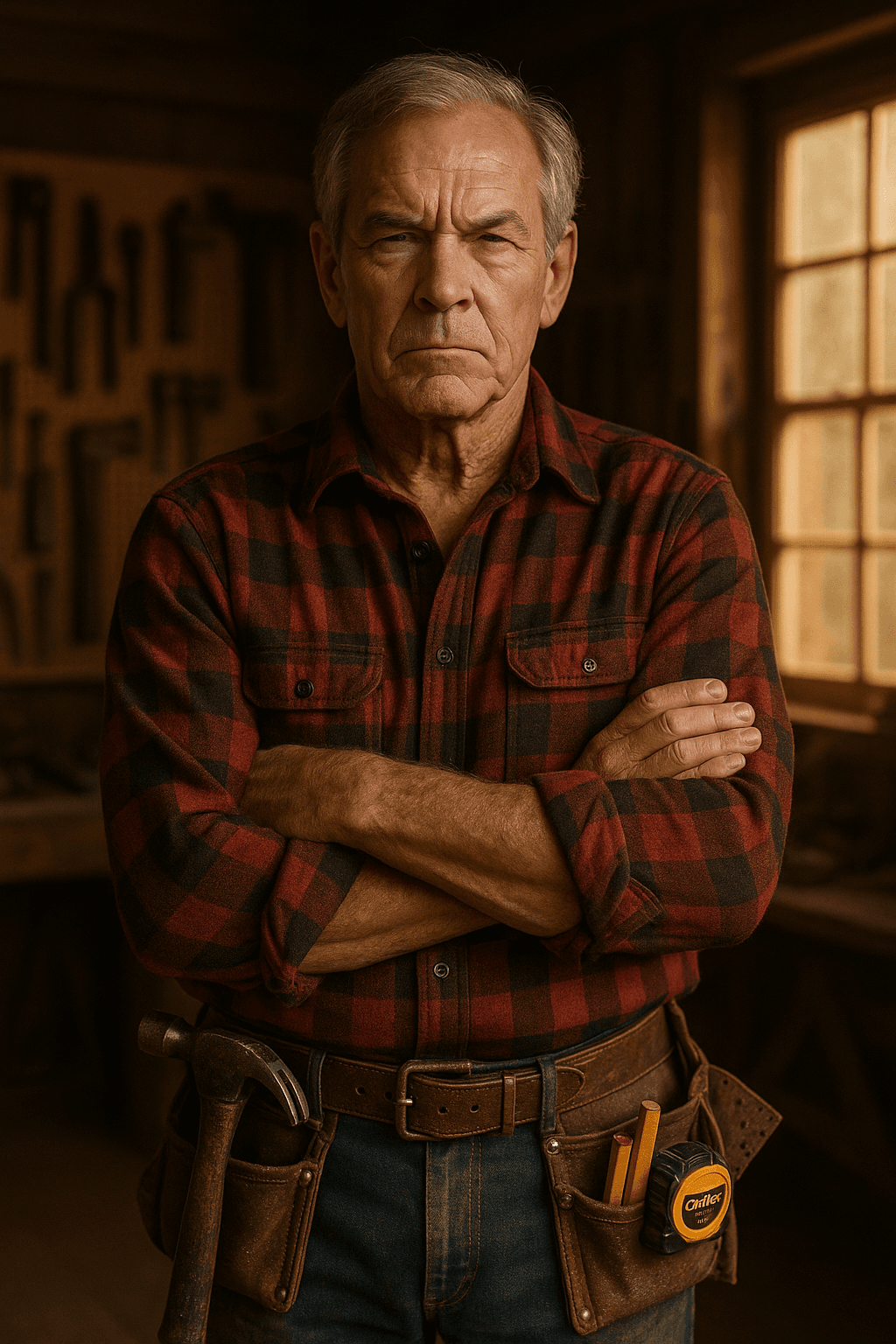
Who's Bob?
You already know Bob. He's your grandpa. Your uncle. The guy three houses down who shows up with a truck full of lumber and doesn't leave until the job is done right.
Bob is sixty years old and has been building things since before he could drive. He learned framing from his father, who learned it from his father. Nobody gave him a certificate. Nobody needed to. You can see it in his hands — calloused, scarred, steady — and in the buildings still standing on every road in the county.
He's not on social media. He doesn't have a website. He has a phone number written on a piece of paper tacked to the bulletin board at the feed store, and that's always been enough.
More often than not, Bob shows up alone. One man, one truck, one tool belt. He doesn't need a crew for most of it. He'll frame the walls flat on the deck, raise them one at a time, brace them plumb, and move on to the next. By the time you come back with lunch, the ridge board is up and he's cutting rafters.
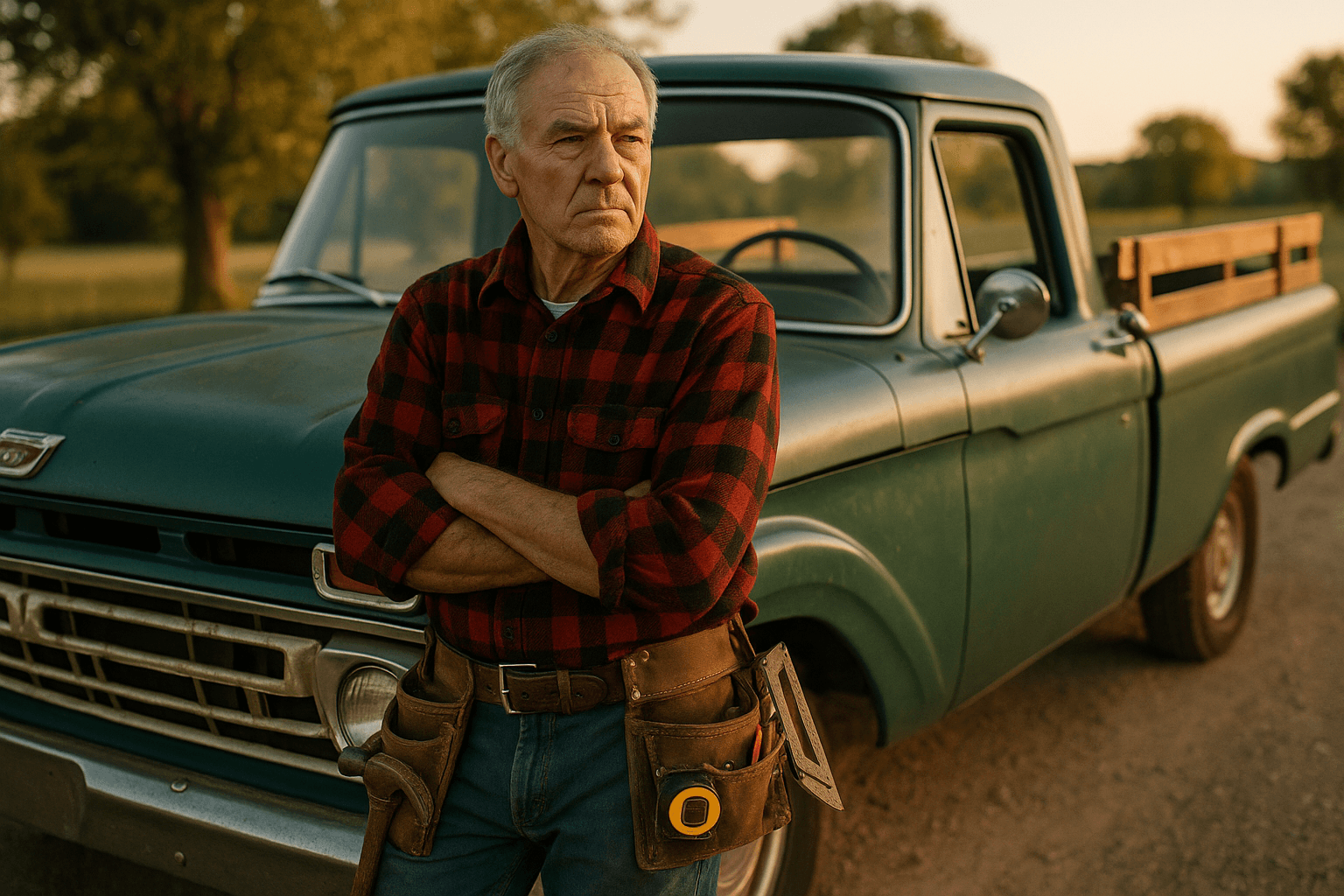
The truck is a '60s Ford. It starts every morning. He sees no reason to replace it.
His truck is older than most of his neighbors. A 1960s Ford F-100, forest green, with wooden side rails he built himself so he can haul tall loads without tying anything down. Manual windows. Manual transmission. A steel thermos of coffee rides in a makeshift cupholder. There's a framing square behind the seat and a wool blanket folded on the bench. It's not vintage — it's just his truck.
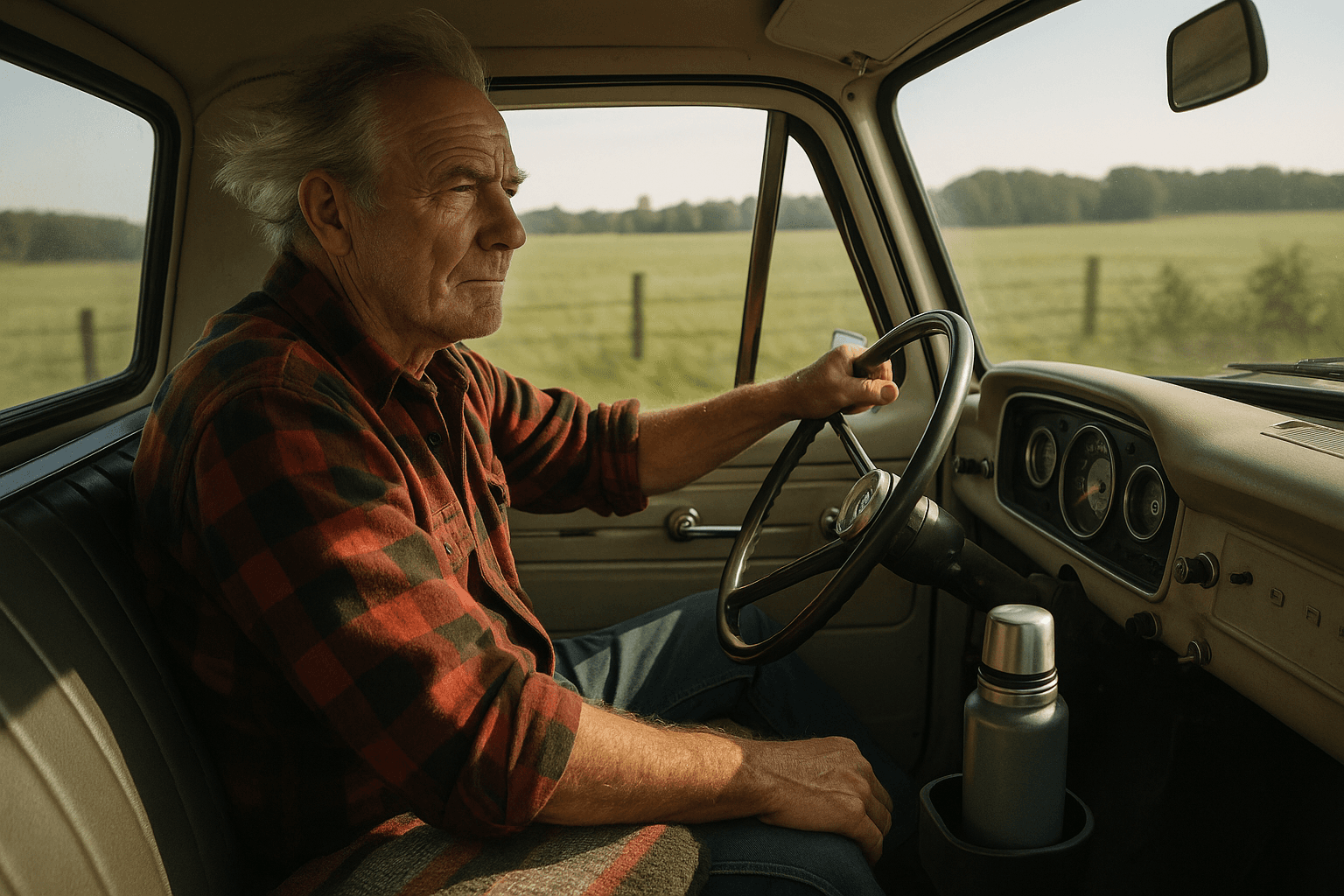
Window down, country rolling by, headed to the job site.
Bob uses hand tools by choice, not nostalgia. He owns a table saw but reaches for the hand rip saw first. He believes if you can't do it with hand tools, you don't understand it well enough to do it with power tools. A sharp chisel is worth more than a dull power tool.
His go-to tools: a framing square, a chalk line, a crosscut saw, a block plane, a set of timber framing chisels, and a 22oz Estwing that's older than most of his neighbors.
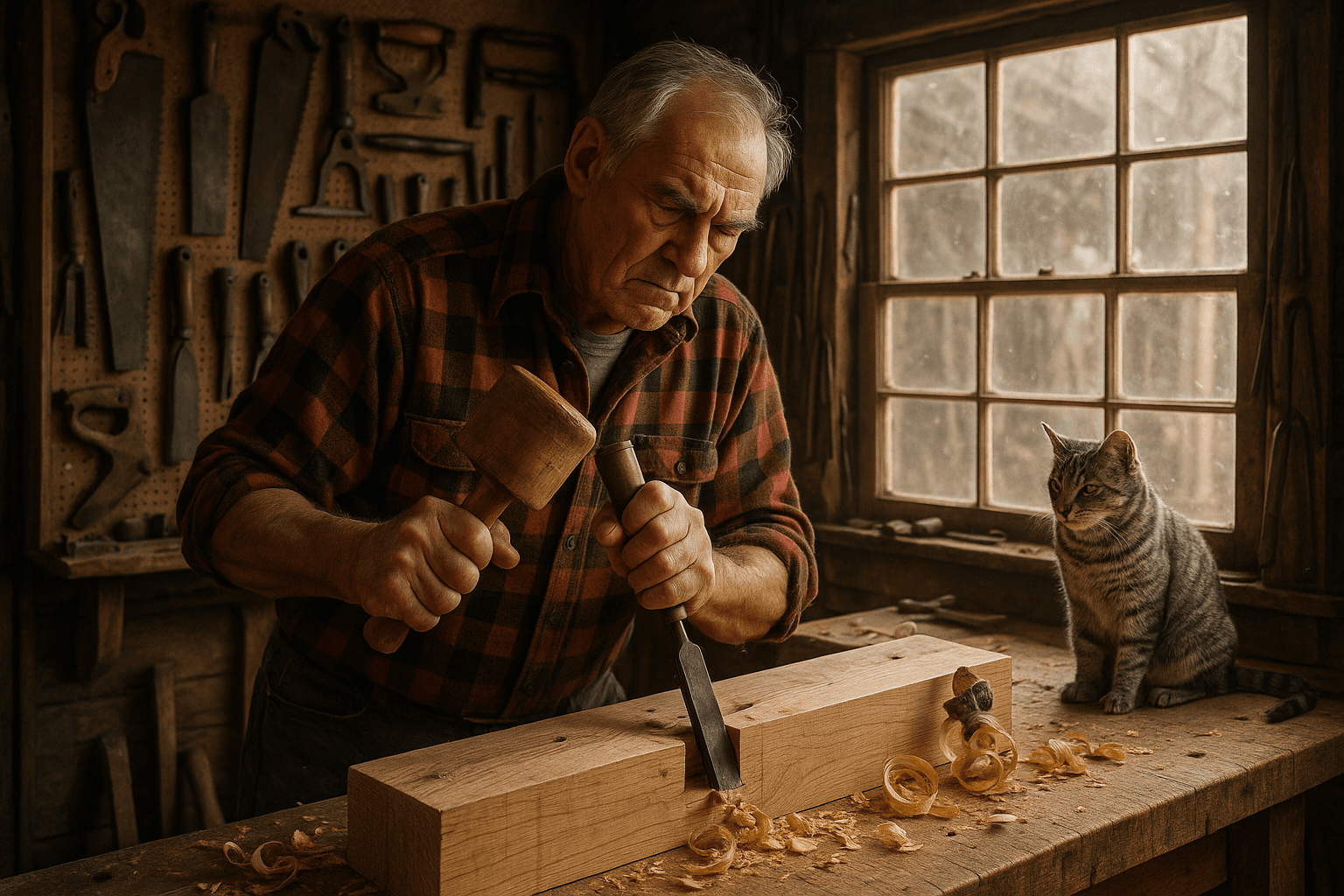
Sawdust, linseed oil, and black coffee. The radio is tuned to AM.
Bob's workshop is a post-and-beam outbuilding he framed himself thirty years ago. The walls are lined with antique hand tools — wooden-handled chisels, a brace and bit set from the 1940s, drawknives, spokeshaves, and a timber framing slick that belonged to his grandfather. The floor is swept but never quite clean. Shavings find their way into every corner.
He keeps a radio tuned to AM — weather and classic country. No Bluetooth speaker. No playlist. He's in the shop by 6:30.